
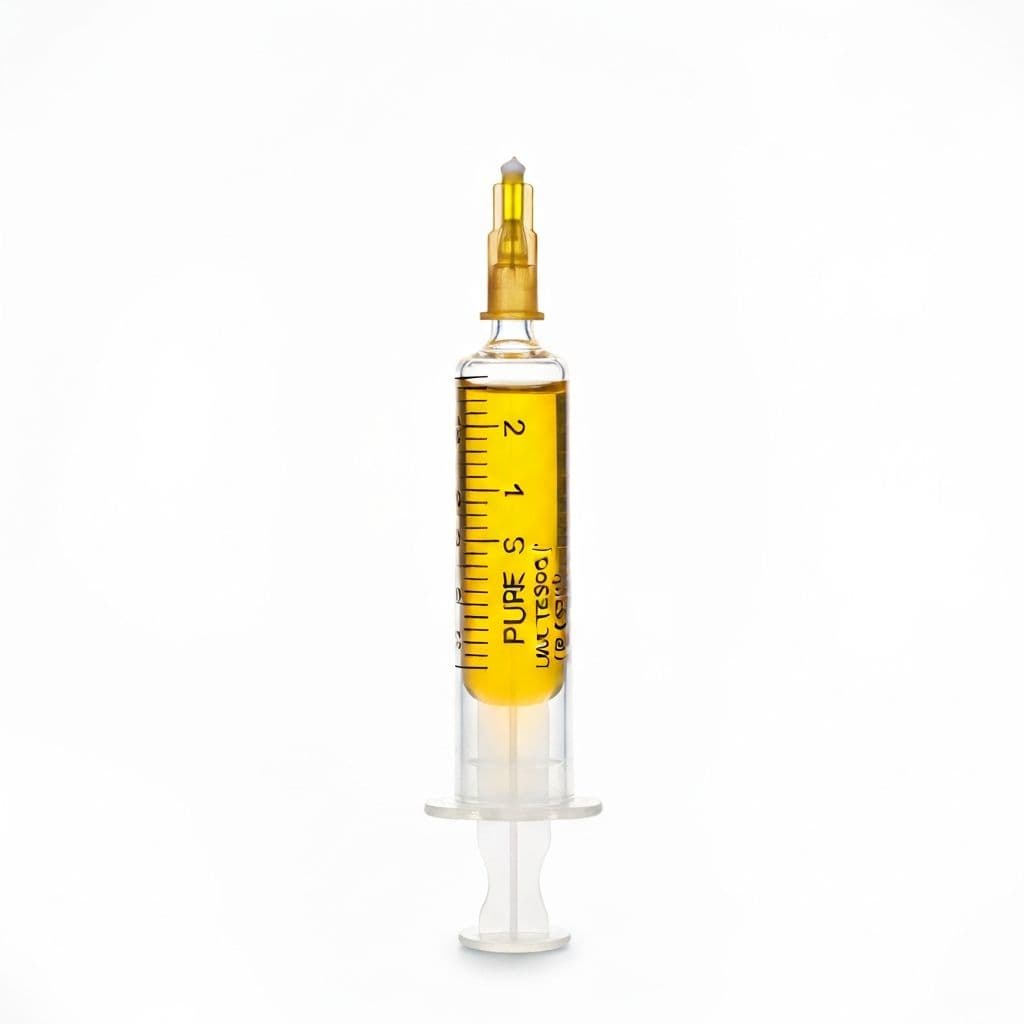
Rick Simpson Oil: History and Origins of RSO
Rick Simpson Oil, usually shortened to RSO, is one of the best-known names in concentrated cannabis products. Few people who use the term know where it came from. This guide tells the history: who Rick Simpson is, how a homemade oil became a global name, how the term has changed since, and what is and is not established about the claims that surround it.
This is a history and background article. It is not medical advice, and it does not recommend any product, dose or use. If you want practical information on reading product labels, see our RSO dosage guide. For help comparing products, see our guide to RSO.
Last updated: October 10, 2026.
On This Page
- Who is Rick Simpson?
- Timeline of key events
- Where the name Rick Simpson Oil came from
- Run From the Cure and the spread of RSO
- The claims around RSO and what the evidence shows
- From homemade oil to commercial products
- RSO and FECO: how the terms relate today
- Why home extraction is dangerous
- Legal status and why it varies
- Not affiliated with Rick Simpson
- Frequently asked questions
- Sources and further reading
Who Is Rick Simpson?
Rick Simpson is a Canadian cannabis activist and author from Nova Scotia. He has described himself as a former engineer who worked in a hospital setting. He is not a physician or a scientist, and nothing he has published has been through clinical trials or peer review.
Simpson's story, as he tells it, begins with a workplace accident in 1997. He has said he suffered a serious head injury while working near insulated pipes and was left with lingering symptoms, including ringing in the ears and dizziness. According to accounts of his story, conventional treatment did not give him the relief he wanted, and he began to look into cannabis. He grew his own plants and started making a concentrated oil from them.
The second part of the story is the one that made him well known. Around 2003, Simpson has said, he was diagnosed with skin cancer on his body. He recalls hearing a radio report about laboratory research on cannabinoids and cancer cells, and he decided to apply the oil he had made to the affected skin and cover it with a bandage. He reports that the lesions went away. That account is his own testimony. It has not been medically verified or studied, and one person's report of one outcome cannot show that a product treats a disease.
What can be said with confidence is that Simpson decided to share both the oil and his method. He gave the oil away for free, reportedly to hundreds of people, and he published how he made it. That decision, more than any medical claim, is what turned a backyard preparation into a worldwide name.
Timeline of Key Events
The dates below come from Simpson's own published accounts and from news and film coverage. Where sources differ or an event is only reported by Simpson himself, we say so.
| Period | Event |
|---|---|
| 1997 | Simpson reports a serious head injury at work, which he describes as the start of his search for relief. |
| Around 2003 | Simpson reports a skin cancer diagnosis and says he treated it with his homemade cannabis oil. This is his personal account only. |
| Early to mid 2000s | He gives oil away to other people and begins publishing information about how he makes it. |
| About 2005 | Canadian police reportedly raid his home and seize his plants. News coverage of the case reported that the court noted he was not producing cannabis for profit, and that the case ended with a fine. |
| 2008 | The documentary Run From the Cure, about Simpson and the people he says used his oil, is released. |
| Late 2000s to 2010s | He publishes books, including his autobiography Phoenix Tears: The Rick Simpson Story, and later moves to Europe. |
| 2010s to today | The term RSO spreads far beyond Simpson himself and is used by sellers, forums and manufacturers in many countries. |
The sequence matters because it shows how the name travelled: from one man's personal account, to a legal case that attracted media attention, to a film, to books, to an internet-wide label for a type of product that Simpson himself does not control.
Where the Name Rick Simpson Oil Came From
Simpson's own name for his oil was Phoenix Tears. The title of his autobiography uses that name, and his official website still carries it.
The label Rick Simpson Oil came later and, according to Simpson's official site, was coined by someone else. That site credits the cannabis activist Jack Herer with the phrase. The shorter form, RSO, followed naturally. It was easier to type into a search box and easier to put on a label than Phoenix Tears.
Three points about the name are worth keeping in mind:
- It is a name, not a standard. No regulator, laboratory or industry body defines what an RSO product must contain.
- It was never a brand in the usual sense. Because Simpson shared his method openly, many people and businesses have made oil and called it RSO.
- It now describes a style of product. Today the term usually means a thick, dark, concentrated cannabis oil that is intended to keep a broad range of the plant's compounds.
If you are reading product pages today, the practical consequence is simple. The name alone tells you very little. A label, a laboratory report and a clear ingredient list tell you far more. Our certificates of analysis guide explains how to read one.
Run From the Cure and the Spread of RSO
Most people who know Rick Simpson's name first met it through the 2008 documentary Run From the Cure. The film follows Simpson as he explains his views, presents people who say his oil helped them, and criticizes what it portrays as institutional resistance to cannabis research.
The film's reach was large for an independent production. It circulated online at a time when social video was just taking off, and it gave a worldwide audience their first look at a high-potency cannabis extract. Searches for the oil rose, and so did the number of people publishing recipes and personal stories.
It helps to read the film as what it is: advocacy built around personal testimony. It is not a clinical study. The accounts in it are individual stories that are not controlled and not independently verified, and the film's strong language, including calling cannabis a cure-all, goes well beyond anything medical research has established.
The film also helped create a lasting confusion that still shows up in search results. Many people assume that RSO is a single, proven product with a standard formula. In reality, the film introduced a story and a preparation method, and the market that followed produced very different products under the same three letters.
The Claims Around RSO and What the Evidence Shows
Much of the public interest in RSO comes from claims about cancer and other serious illnesses. Because those claims have real consequences for real people, this section sets out what is known as plainly as possible.
What is established. Researchers have studied cannabinoids, including THC and CBD, in laboratory settings, including in cells and in animals. Some of that work has looked at how cannabinoids interact with cancer cells. Laboratory results of this kind are an early stage of research. They do not show that a substance works in people, and many compounds that act on cells in a dish never become treatments.
What is not established. There are no reliable clinical trials showing that RSO, or any homemade or unstandardized cannabis oil, treats, cures or prevents cancer or any other disease. Reports from individuals can be sincere and still be unreliable, because people may be having other treatment at the same time, because illness can change on its own, and because stories of success are shared more than stories of failure.
What does have regulatory approval. A small number of standardized cannabinoid medicines have been approved by regulators for specific, narrow uses, such as certain seizure disorders and nausea related to chemotherapy. These are pharmaceutical products with a controlled composition and tested doses. They are a different category from a homemade or commercially sold oil, and their approval says nothing about RSO.
Why this matters. Choosing an unproven product in place of established medical care can cause harm, including delay in effective treatment. If you or someone close to you is dealing with a serious illness, talk to a qualified healthcare professional before using any cannabis product, and do not stop or change prescribed treatment based on claims you read online, including on this website.
You can read more about the limits of the evidence in the sources listed at the end of this article. For a reminder of what a safe approach to labels and quantities looks like, see our RSO dosage guide.
From Homemade Oil to Commercial Products
When Simpson shared his method, he was describing a home process using a solvent to pull compounds from cannabis flower. The result was a dark, thick, sticky oil. His version used his own plants and varied from batch to batch.
Over time, the oil moved from kitchens into the legal market in places where cannabis is regulated. Several things changed along the way.
- Testing arrived. Regulated markets introduced laboratory testing for cannabinoid content and, in many places, for contaminants such as residual solvents, pesticides and heavy metals.
- Formats multiplied. What started as a thick oil measured out of a syringe is now also sold as capsules, tinctures, edibles and other products.
- Labels gained numbers. Instead of a general description, buyers can now see milligrams and percentages, and they can compare them between products, as long as they understand the units. Our dosage guide explains how.
- The meaning of the term loosened. Because RSO is not defined by any authority, sellers use it for products that differ in source material, extraction method and concentration.
That last point is the most important one for anyone buying today. A modern product sold as RSO may have little in common with the oil Simpson described, apart from the dark color, thick texture and the intention of keeping a broad mix of plant compounds. It may be a laboratory-tested commercial extract made with controlled equipment, or it may be an unlabeled product of unknown origin. The history explains the name. It cannot tell you what is in a particular package.
RSO and FECO: How the Terms Relate Today
If you have read about RSO, you have probably also seen FECO. FECO stands for full extract cannabis oil, and some sources expand it as full extraction cannabis oil.
The two terms overlap heavily. Both usually describe a concentrated oil meant to retain more than one cannabinoid, and some sellers use them interchangeably. When they are distinguished, it is usually on the basis of the extraction approach or the starting material. Those distinctions are not applied consistently, and there is no universal rule that makes one stronger, cleaner or safer than the other.
A fair way to think about it is this:
- RSO is a name with a history, tied to one person and one story.
- FECO is a descriptive term that does not refer to a person.
- Neither term guarantees a composition, a potency, a method or a level of quality.
For a side-by-side look at how the two compare, including what to check on a product page, read our RSO vs. FECO guide. For the FECO side of the story, see our guide to FECO.
Why Home Extraction Is Dangerous
Because Simpson published his approach, many people have tried to repeat it at home, and this is the most practical safety lesson in the whole history of RSO.
Solvent-based extraction uses liquids that can be highly flammable. Vapors can build up in a closed room and ignite from a spark, a pilot light or an electric appliance. Fires and explosions during home extraction have injured people and destroyed homes. Even when nothing ignites, homemade oil can retain solvent that was not fully removed, and a home preparation cannot be tested for contaminants.
For these reasons, we do not publish extraction instructions, and we do not recommend making cannabis concentrates at home. Where cannabis products are legal, commercially made and tested products exist so that people do not have to take this risk. Where they are not legal, home production can also carry legal penalties.
Legal Status and Why It Varies
The legal position of RSO depends on where you live, and it changes. There is no single answer that applies everywhere.
In some countries and regions, cannabis concentrates may be sold through licensed retailers under rules about testing, labeling, THC limits and age. In others, they are restricted to medical programs. In others, any sale, possession or import is a criminal offense. Within a single country, rules can differ between states, provinces or local areas, and rules about shipping can differ from rules about possession.
Simpson's own legal difficulties in Canada in the 2000s took place before cannabis was legalized there for adult use in 2018, and the law in many places has moved since. Anything you read online about legal status can go out of date, including this section, so check current guidance from your local authorities before buying, possessing or travelling with any cannabis product.
Do not assume a product is legal because a website sells it or ships to your address. You are responsible for following the laws that apply to you.
Not Affiliated With Rick Simpson
RSO & FECO is not affiliated with, endorsed by or connected to Rick Simpson. Rick Simpson's official website states that he has no connection with the companies that sell products using his name. We use the term RSO because it is the common name for a type of product, and we refer to Rick Simpson only to describe the history of that name.
Nothing on this website should be read as a statement, endorsement or recommendation from him.
Frequently Asked Questions
Who invented Rick Simpson Oil?
Rick Simpson, a Canadian activist, popularized the preparation and the story behind it. He called it Phoenix Tears. Cannabis extracts existed before him, but he made the method and the oil widely known.
What does RSO stand for?
RSO stands for Rick Simpson Oil. According to Simpson's official website, the phrase was coined by the cannabis activist Jack Herer.
Is Rick Simpson a doctor?
No. He has described himself as a former engineer and is an activist and author. He is not a physician, and his accounts have not been clinically reviewed.
Is RSO the same as Phoenix Tears?
Phoenix Tears was Simpson's own name for his oil. The name RSO later became the common label. In practice, products sold today under either name can vary widely.
Did Rick Simpson cure his own cancer with RSO?
Simpson says so, and that is his personal account. It has not been independently verified, and one person's report cannot show that a product treats a disease. There are no reliable clinical trials showing that RSO treats or cures cancer.
Does RSO cure cancer?
No reliable clinical evidence shows that RSO cures or treats cancer. Cannabinoids have been studied in laboratory research, but that is not evidence of effectiveness in people. RSO should never replace established medical care.
What is the difference between RSO and FECO?
The terms overlap. RSO is a name tied to Rick Simpson, while FECO describes a full extract cannabis oil. Neither guarantees a composition or a method. Read our RSO vs. FECO guide for a comparison.
Is RSO legal?
It depends on where you live and on the product. Laws differ between and within countries and change over time. Check current guidance from your local authorities.
Why does the strength of RSO products vary so much?
Because RSO is not a standardized product. Source material, extraction method, formulation and testing differ between sellers. Read the label and the laboratory report for the specific product, and see our dosage guide for how to read them.
Is this website affiliated with Rick Simpson?
No. See the section above.
Sources and Further Reading
This article draws on the following kinds of sources. We recommend reading them directly rather than relying on any seller, including us.
- Rick Simpson's own published accounts, including his autobiography Phoenix Tears: The Rick Simpson Story, and his official website, for his account of events and the origin of the name.
- Run From the Cure (2008), for the story as Simpson and his supporters tell it.
- The National Cancer Institute's cannabis and cannabinoids summary, for an overview of the research and its limits.
- Health Canada's cannabis laws and regulations and your local regulator, for current rules on cannabis products.
Statements in this article about Simpson's life come from his own accounts and from news and film coverage. They are reported as claims where they have not been independently verified.
Related Guides
- Rick Simpson Oil (RSO) guide
- RSO vs. FECO
- FECO guide
- RSO dosage guide
- Certificates of Analysis
- Where to buy RSO online
Products sold on this site are not intended to diagnose, treat, cure or prevent any disease. Nothing in this article is medical advice. Speak to a qualified healthcare professional about any health concern.